
Cell Culture Media, Supplements, and Reagents


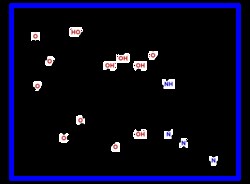
Chem-Impex International, Inc. Rifampicin | 13292-46-1 | MFCD00151389 | 5G
Rifampicin, 13292-46-1, MFCD00151389, 5G


Selleck Chemical LLC Pramipexole S2460-20mg

Pramipexole (SND 919 Mirapexin Sifrol Mirapex) is a partial/full D2S D2L D3 D4 receptor agonist with a Ki of 3 9 2 2 0 5 and 5 1 nM for D2S D2L D3 D4 receptor respectively

Selleck Chemical LLC Leucic acid
Leucic acid ((S)- -hydroxyisocaproic acid) is a metabolite of the branched chain amino acid known as leucine which plays a significant role in the synthesis of muscle protein

Medchemexpress LLC Eravacycline dihydrochloride | 1334714-66-7 | MFCD31544362 | 5mg
Eravacycline dihydrochloride | Purity: 98.01% | MW: 631.48 | 1334714-66-7 | MFCD31544362 | 5mg

Bioworld Carbenicillin Solution, 100 mg/mL, 25 mL
Technical • α-Carboxybenzylpenicillin, Disodium Salt • Sterile Filtered • Plant Tissue Culture TestedAppearance: LiquidBoiling Point : 737.8 °C at 760 mmHg (Predicted)Melting Point: >200 °CRTECS Number: ON9105000
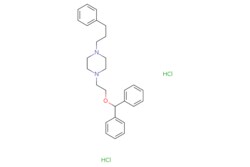
eMolecules 67469-81-2 | Medchem Express | GBR 12935 (dihydrochloride) | 10mg | 446260871 | HY-12242 | MFCD00083175 | 487.51 | C28H36Cl2N2O
Medchem Express | GBR 12935 (dihydrochloride) | 10mg | 446260871 | HY-12242 | 67469-81-2 | MFCD00083175 | 487.510 | C28H36Cl2N2O
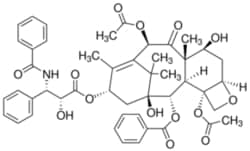
Sigma Aldrich Fine Chemicals Biosciences Paclitaxel | 33069-62-4 | MFCD00869953 | 5mg
Paclitaxel | Purity: ≥95% (HPLC) | MW:853.91 | 33069-62-4 | MFCD00869953 | 5mg


Selleck Chemical LLC Ibandronate sodium monohydrate S3148-50mg
Ibandronate (BM-21 0955 BM-210955 RPR-102289A) is a highly potent nitrogen-containing bisphosphonate used for the treatment of osteoporosis

Medchemexpress LLC Oligomycin B | 11050-94-5 | 540016 | 5 MG
Oligomycin B | 11050-94-5 | 540016 | 5 MG

Sigma Aldrich Fine Chemicals Biosciences Pleuromutilin >=95% | 125-65-5 | 25MG
Pleuromutilin >=95% | Purity: >=95% | Mol Wt: 378.5 | 125-65-5 | 25MG
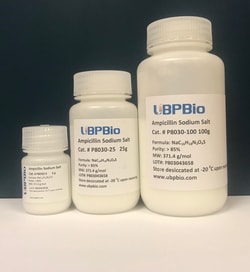
Ubpbio Ampicillin Sodium Salt, 100G
Ampicillin is a semi-synthetic bactericidal antibiotic in the penicillin family. It primarily acts on Gram-negative bacteria by inhibiting bacterial cell-wall synthesis.
Sigma Aldrich Fine Chemicals Biosciences Lonidamine mitochondrial hexokinase inhibitor | 50264-69-2 | MFCD00866285 | 5MG
Lonidamine mitochondrial hexokinase inhibitor | Purity: >=98% (TLC) | Mol Wt: 321.16 | 50264-69-2 | MFCD00866285 | 5MG

Bioworld Chlortetracycline HCl, 25 g
Chlortetracycline, HCl Bacteriostatic antibiotic active against Gram-positive and Gram-negative bacteria.Protect from light.A specific and potent calcium ionophore antibioticFor in vitro lab use only. Not for human use or consumption.Appearance: SolidBoiling Point : 828.9 °CMelting Point: 210-215 °C (lit.)(dec.)RTECS Number: QI7800000
Medchemexpress LLC Clindamycin | 18323-44-9 | 100 MG
Clindamycin is an orally active, broad-spectrum bacteriostatic lincosamide antibiotic. It inhibits bacterial protein synthesis and can suppress the expression of virulence factors in *Staphylococcus aureus* at sub-inhibitory concentrations (sub-MICs). Resistance to Clindamycin occurs due to enzymatic methylation of the antibiotic binding site in the 50S ribosomal subunit (23S rRNA). Clindamycin also reduces the production of Panton-Valentine leucocidin (PVL), toxic-shock-staphylococcal toxin (TSST-1), or alpha-haemolysin (Hla), and can be used in malaria research.
- Orally active
- Broad-spectrum bacteriostatic lincosamide antibiotic
- Inhibits bacterial protein synthesis
- Suppresses virulence factor expression in *Staphylococcus aureus*
- Decreases production of PVL, TSST-1, or Hla
- Can be used for malaria research
Medchemexpress LLC L-glutamic acid, 4-methyl-, (4R)- | 31137-74-3 | 98.0% | 161.16 | C6H11NO4 | 50 MG
SYM 2081 is a selective, high-affinity kainate receptor agonist used as a laboratory research reagent to study glutamatergic signaling, transporter function, neuroprotection, and apoptotic pathways. Intended for research use only and supplied as a white to off-white solid with manufacturer-provided characterization.